Share this post!
When I was younger, I thought of granola as the boring alternative to cereal. I couldn’t understand why someone would willingly eat something with raisins, nuts, or seeds in it. I loved cereal and it was what I ate for breakfast every day. As I got older, my taste buds changed and I started to develop a taste for it. I loved to put it on yogurt or eat it with milk. I never had homemade granola, so all I knew was the stuff on the shelves. It wasn’t until much later—after learning about traditional food preparation and eventually developing my own soaked granola recipe—that I realized the granola sold in stores is often very high in sugar, low in real nutritional value, and didn’t make me feel very good.
After attending the Certified Natural Food Chef Program and learning that there are proper ways to prepare foods, I stopped eating granola altogether. Store-bought granola takes cereals (i.e., oats, millet, corn, etc.), seeds, nuts, and sweeteners and bakes them at very high temperatures to obtain a crispy texture. Additionally, the oats we see in store-bought granola likely have high levels of glyphosate, which is very harmful to our health. Cooking nuts, seeds and cereals at high temperatures can damage the nutrients of those foods and make them either unavailable to us, or even non-existent. When we eat foods like these, our bodies may have a hard time digesting and recognizing them, which in turn can cause various health issues that many people face today. After learning this information, I reflected on my own health journey (I struggled with very poor gut health) and over the years, have had a love/hate relationship with grains. I have to wonder, was it really the grains or was it the improper way they were being prepared?
Why We Love It
Proper Preparation Matters
You can make homemade granola by using proper preparation techniques to be able to digest and reap nourishment from it, which is exactly what this soaked granola recipe is designed to do. What is the “proper” way to prepare granola you ask? First, I recommend buying organic oats (this is my favorite brand). Then, soak them in filtered water and kefir for 24 hours. If you have a dairy allergy or intolerance, you could use lemon juice or vinegar in place of it.
Supporting Digestion and Mineral Absorption
Grains contain phytic acid, which can bind to important minerals we need and block our body’s absorption of them. This can lead to mineral deficiencies and bone loss. Soaking neutralizes those minerals and breaks them down so that they can be properly absorbed. If using nuts and seeds, these will also need to be soaked overnight (for the same reasons), but in a saltwater brine instead of water and kefir. Make sure to store nuts and seeds in the refrigerator, as light and heat can damage them and make them rancid. Natural Grocer’s sells nuts and seeds in the refrigerator, so if you have access to that grocery store, I would highly recommend getting your nuts and seeds from there.
Low Heat, High Nourishment
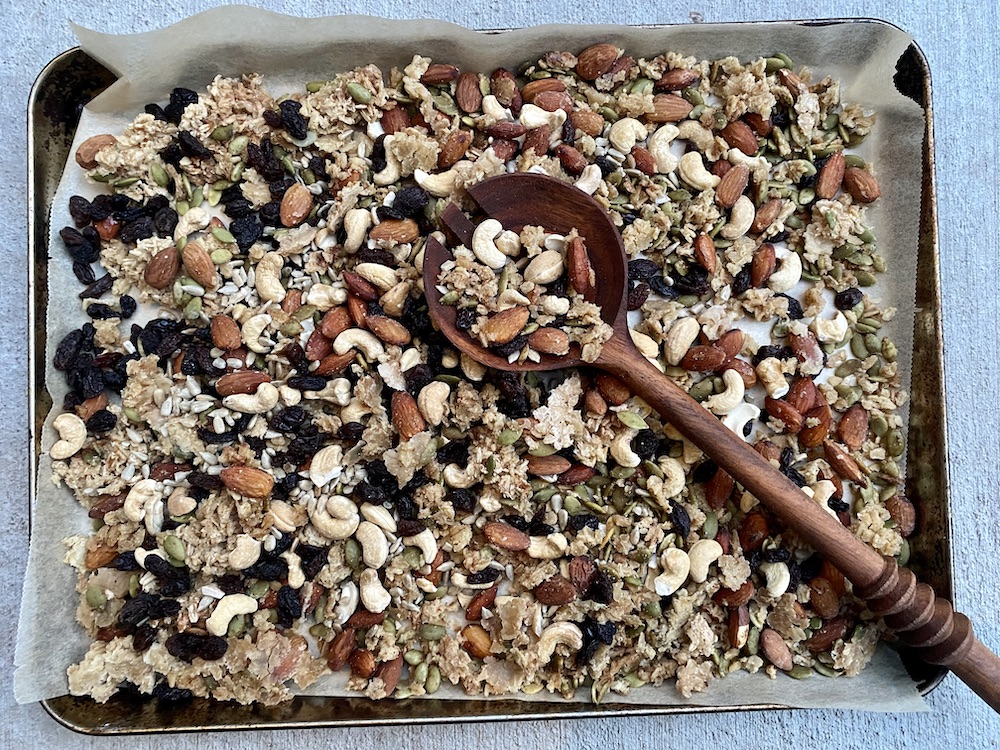
Once all of the soaking has been completed, you will bake the granola at a very low temperature (200°F), a key step in this soaked granola recipe, so that the nutrients in the grains, nuts, and seeds are not damaged by high heat. If you do not feel comfortable leaving your oven on for that long, you could opt for a dehydrator if you have one. The best part about baking the granola is the aroma that will fill your home. The smell of cinnamon (see the note below) will fill your house and make you think about it all day! You can batch make this recipe so that you have plenty of granola on hand for you and your family.
Please note: the FDA has recalled several cinnamon brands due to contamination with lead. I don’t recognize any of the brands listed there, but it is something to be aware of and take into consideration when purchasing cinnamon.
Soaked Granola Recipe
Ingredients:
- 3 cups organic oats
- 3 cups warm, filtered water
- ¼ cup kefir (sub vinegar or lemon juice if dairy intolerant)
- ¼ cup melted butter
- ½ cup raw honey or maple syrup
- 1 Tbsp cinnamon
- 1 tsp sea salt
- Optional: dried fruit, soaked and dried nuts or seeds (i.e., cashews, almonds, sunflower seeds, pumpkin seeds, walnuts, pecans), shredded coconut
Directions:
- Add oats to a large glass bowl. Add water and kefir to the bowl and incorporate with the oats.
- Let it sit at room temperature for 24 hours.
- After 24 hours, drain the oat mixture and set the oven to 200°F.
- Line a sheet pan with parchment paper and spread the mixture and optional add-ins on the sheet pan.
- Bake for 6-8 hours or until crisp
- Serve and enjoy with homemade yogurt or raw milk. Make sure to store it in a container in the fridge.
Recipe adapted from the Weston A. Price Foundation
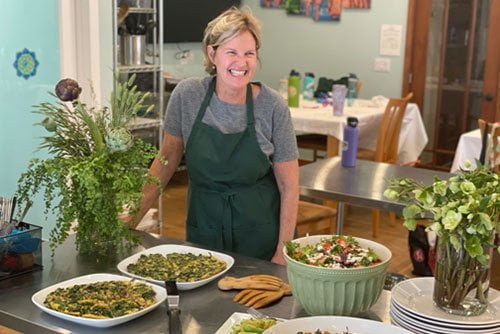
About the Author: Meghan McGee is a graduate of NTI’s Certified Natural Food Chef program as well as an Integrative Nutrition Health Coach. She believes food is the most powerful catalyst that brings people together. Sitting around a table, enjoying a nourishing meal with strangers or friends is her absolute favorite thing to do. Her mission is to inspire others to take control of their health. You can find Meghan’s personal chef and other services at megsnourishedkitchen.com.
Photo by Meghan McGee
Share this post!
Categories
Recent Posts

Mar. 04, 2026
Pan-Seared Lamb Chops with Herb Pesto
Feb. 20, 2026
Medicinal Mushrooms: From Cultivation to Extraction with Andy Cappetta

Feb. 18, 2026
How to Eat for the Most Gorgeous and Healthy Skin of Your Life
Feb. 01, 2026
Traditional Soaked Granola

Jan. 20, 2026
Supporting GLP-1 Naturally: A Functional Approach for Practitioners